
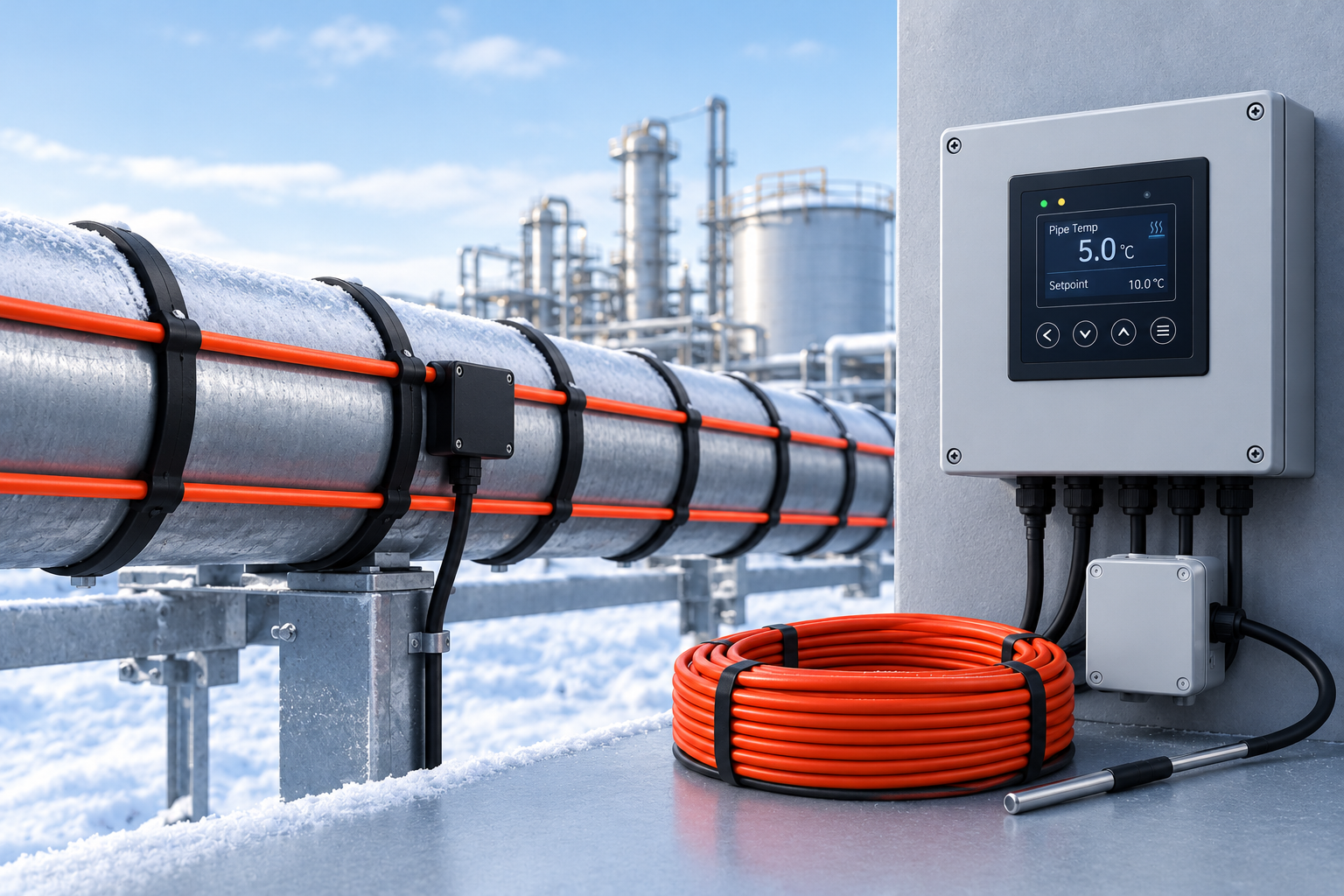
It is important that Heating Cable Control Systems undergo inspection and testing periodically to enable industrial cold storage to recognize any electrical malfunctions, control malfunctions, and possible issues with floor protection. This can be achieved through a planned maintenance schedule including visual inspection, insulation resistance test, continuity test, and controller check. In the case of Floor Heating Cables for Cold Storage, maintenance will have to take into account floor condition, temperature sensors, insulation, and system configuration. It is particularly helpful for the owners of cold storage facilities in the United Arab Emirates to conduct planned inspections.
Why Heating Cable Maintenance Matters in Industrial Cold Storage
Heating cable control systems may help keep the correct floor temperature and avoid frost damage. Other heating uses can shield the frames, drains or elements from freezing or condensing. Different uses have different needs. It is essential to know the purpose of the system for any inspection planning. Preventive maintenance allows for the detection of faulty heating cables, broken insulation, malfunctioning sensors, incorrect control settings and any problems with the electrical connections. Moreover, it allows for comparisons of the actual and the initial results. It is crucial to remember that correct air temperature inside the freezer doesn’t guarantee correct functioning of the underfloor heating system.
Understanding Heating Cable Control Systems
The components of a heating cable control systems normally comprise heating cables, temperature sensors, thermostats or controllers, electrical protection, and connection equipment.
- Heating cables: Produce heat in accordance with their specifications and electrical ratings.
- Thermostats and sensors: Control the temperature and operate the heating system based on preset values.
- Electrical protection: Offers protection for the circuit against defined electrical faults.
- Monitoring and alarms: When used, signal abnormal operation and fault conditions for the system.
A faulty sensor or controller may impact the functioning of the system even where the heating cable is fully operational. This implies that maintenance of the whole system should be considered rather than merely the presence of electricity.
How to Plan a Heating Cable Maintenance Schedule
Inspections must be carried out at regular intervals as recommended by the manufacturer according to the installation design and operating conditions and applicable electrical requirements. Annual inspections are recommended in some cases but must not be universally applied.
1. Establish commissioning records Cable model, circuit configuration, required resistance, insulation resistance data, sensor placement, controller settings, and protective device testing data must be recorded if applicable. Such initial measurements will allow future technicians to detect changes. Maintaining the original configuration of the cables is especially important if the cables run below any concrete floors.
2. Schedule inspections appropriately Conduct inspections in line with operating conditions and scheduled maintenance times. Further inspections might be required following floor renovations, building work, water leakage, electrical problems, and/or multiple protective device trips.
3. Assign qualified personnel Visual inspection is one activity involved in maintaining facilities. Electrical isolation, measurement of insulation resistance, and fault finding must be done by qualified and authorized persons.
Essential Heating Cable Testing Procedures
Visual inspection
Examine any exposed cables, connectors, junction boxes, or control components for any physical damage, water, rust, loose connectors, faulty enclosure, or overheating. In case of under-flooring systems, inspect floor inspection reports and find out any unexpected cracking or movement. This does not necessarily mean that there is a problem with the heating cable, but it does need engineering review.
Insulation-resistance testing
Insulation resistance testing is the verification of the electrical insulation that exists between the heating elements and the specific protective screen, sheath, or other reference point as stated by the manufacturer. An authorized person needs to disconnect the circuit, carry out the test as per the manufacturer’s instructions, use the recommended test voltage and compare the results to the acceptance criteria for that product. Low or decreasing values could be an indication of poor insulation, moisture and termination issues. A standard insulation resistance value cannot be applied to all heating cables.
Continuity and conductor-resistance testing
Continuity test measures the integrity of the electrical path intended. Comparison of the values should be done against those that are specified by the manufacturer. Anomalies can be a result of either damaged cables, bad connection, or inaccurate measurements. The continuity test cannot take the place of an insulation resistance test because a cable can still exhibit continuity even when its insulation is damaged.
Controller and sensor verification
Ensure that temperature readings are realistic, that sensor wiring is undamaged, that the controller setting agrees with the design drawing, and that the heater control works properly. If installed, check alarms, electrical protection, and building management system signals per the manufacturer’s instructions. Find out why protective devices tripped before energizing.
Functional checks and documentation
Once the machine has been inspected and repaired, ensure that it satisfies the relevant requirements before putting it back into service. All results should be documented.
How to Check Floor Heating Cables for Cold Storage
The floor heating cables must be evaluated in the context of the entire floor protection system. First, check the drawings to verify the layout, use, location of sensors, and conditions of operation of the cable. Decide whether the cable system is designed to protect from freezer frost heaving or is a different heating system. Second, evaluate the readings of existing sensors and alarms against the range of operation that is expected. Research unusual readings even if the air temperature of the freezer seems okay. Third, check the history of floor repair, water leakage or any kind of construction work on the floor where the cables can be installed. If the floor moves or is damaged, an engineering evaluation is required.
Common Heating Cable Problems and Their Possible Causes
- Insulation with low resistance: Can mean insulation damage or the presence of moisture. Perform according to the manufacturer’s instructions.
- Open circuit: Can mean damage to the cable or connection. Test continuity and check available connections.
- Incorrect temperature measurement: This may be because of wrong sensors, wiring, or controller settings.
- Faulty heating circuit: Test the source of energy, the control circuit, and the electrical protection circuit.
- Continuous operation of protective devices: Isolate the circuit until a qualified engineer identifies the problem.
- Cracking and floor movement: Get an engineering evaluation to determine the cause.
What Should Heating Cable Maintenance Records Include?
Maintain a separate record for each circuit, including:
- Cable model and circuit identification.
- Inspection date and tester information.
- Findings from visual inspection.
- Insulation resistance and continuity measurement results.
- Testing procedure and acceptance criteria for testing.
- Sensor measurement data and controller settings.
- Alarm and protection device test results.
- Repair work, component replacement, and deficiencies found.
- Final test results and acceptance to service.
Consistent records help maintenance teams identify changes over time and plan corrective work more effectively.
Choosing Heating Cable Control Systems for Cold Storage
Identify the application, temperature range, floor construction, power supply, control needs, and serviceability prior to the choice of system. For freezer floors, floor plans and insulation details aid the vendor/project engineer in assessing the application. Prior to purchase, request the datasheets, installation instructions, commissioning instructions, and service manuals. The cable sizing, circuitry, sensor locations, and controller programming should be checked against the engineering specification, not just based on room dimensions.
Heating Cable Solutions from Al Barad Atlanta Trading LLC
Al Barad Atlanta Trading LLC, based in Sharjah, UAE, lists heating cables for cold-room floor-heating systems, along with related components such as thermostats, fixing strips, and sensor cables. Businesses planning a new installation or reviewing an existing system can explore the available floor heating cables for cold storage and contact Al Barad Atlanta Trading LLC to enquire about product options for their application. Product compatibility and current availability should be confirmed before purchase.
Frequently Asked Questions
1. How often should heating cables in cold storage facilities be tested?
Inspection will be determined based on the cable manufacturer’s recommendations, the system design, and the operational environment, as well as the electrical code. Follow the equipment’s maintenance schedule.
2. What tests are used to check heating cable condition?
Some common tests include visual inspection, insulation resistance test, continuity/conductor resistance test, and proper functioning of thermostat, sensors, and alarms.
3. Can heating cables fail even when the freezer maintains its normal temperature?
Yes. It is possible that while there is a problem with the independent underfloor heating system or its controller, the air inside the freezer will still retain its temperature.
4. What information is needed before purchasing heating cables for cold storage?
Describe intended use, operating conditions, flooring materials, power requirement, control requirement, and design drawings. This information will assist in determining what products are suitable for installation.
5. Where can businesses in the UAE enquire about cold-room floor heating cables?
Businesses can visit Al Barad Atlanta Trading LLC‘s heating cable product category or use its contact page to discuss product requirements. A maintenance schedule allows cold storage warehouses to check the condition of the heating cable control systems, ensure proper control function, and make notes about repairs. The combination of the manufacturer’s recommended testing along with regular documentation ensures that maintenance is done wisely.

