
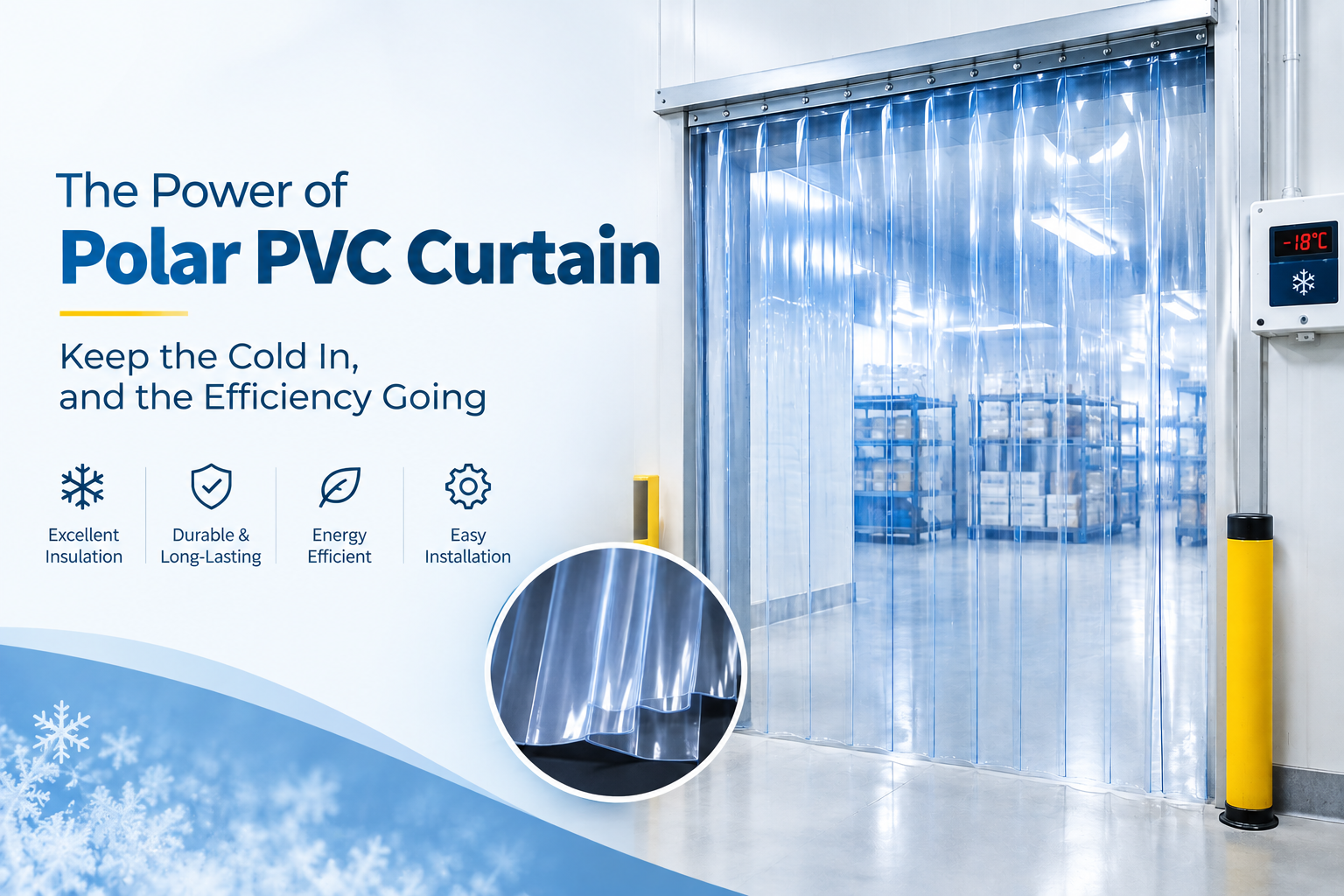
A Practical Guide for Cold-Weather Setups, Including Polar PVC Curtain Installations
Picture this: it’s a bitter January morning, the forklift driver is waiting, and the loading dock door has frozen solid. Or you walk outside after a snowstorm and find a gutter sagging under a thick wall of ice. In both cases, the heating cable you installed “to prevent this” has quietly stopped working, and nobody noticed until it mattered. Heating cables rarely get much attention until they fail. Yet they’re one of those components that, when they work, you forget about entirely.
So how long can you actually count on them? And what can you do to make sure yours last as long as possible? Let’s walk through it, whether you’re managing a cold-storage facility with a Polar PVC Curtain at the doorway or simply trying to keep your home gutters clear.
The Short Answer: Often 10 Years or More, But It Depends
Most quality heating cables, whether they’re installed along door frames, under door thresholds, or inside gutters and downspouts, are designed to last roughly 10 years or more under normal use. Some manufacturers back their products with warranties in that range, and well-maintained cables regularly outlast that window. But “normal use” is doing a lot of work in that sentence. A cable running through a mild climate, protected from physical stress, and inspected once a year can outlive one that’s buried under heavy snow loads, cycled on and off constantly, and never looked at again.
Think of it like a car battery. The manufacturer’s estimate is a starting point, not a promise. How you treat the thing determines the real answer.
What Actually Shortens a Heating Cable’s Life
Heating cables usually don’t die of old age in the way people expect. They fail because something gets in the way of their insulation or their connections. The most common culprits include:
- Moisture getting into splices and end seals. Water is the enemy here. Once it penetrates a connection, corrosion and short circuits follow quickly.
- Mechanical damage. Ice shovels, ladders, forklifts, and even tightly bent cable runs can nick the outer jacket. Small nicks become big failures.
- UV and weather exposure. Outdoor cables with jackets not rated for sunlight can become brittle over time, especially in climates with harsh summers.
- Repeated overheating. Cables running in areas they weren’t designed for, or controllers that don’t regulate temperature properly, can stress the heating element.
- Poor installation. This is the sneaky one. A cable that was overlapped, cut incorrectly, or secured with the wrong clips may work fine for a season and then start failing unexpectedly.
Notice how most of these are preventable. That’s good news.
Door Heating Cables vs. Gutter Heating Cables
Door and gutter applications face different challenges, and that affects how long each one lasts. Door-area cables, including those used alongside a Polar PVC Curtain at a cold-store entrance, deal with constant flexing as the curtain strips move, frequent temperature swings as doors open and close, and occasional physical contact from equipment. Their lifespan depends heavily on how well they’re protected from impact and whether the installation allows for movement without strain.
Gutter cables face a different enemy: the weight and expansion of ice, combined with exposure to the elements all year round. They’re usually easier to inspect, but they’re also harder to reach once they’re up on a roofline. A cable that’s out of sight can easily stay out of mind until ice dams form.
Honestly, the cables in both locations last longest when someone checks them regularly. Which brings us to the most underrated factor of all.
Maintenance Makes the Biggest Difference
Here’s a question worth sitting with: how often do you check your heating cables? If the answer is “only when something breaks,” you’re gambling with their lifespan. A simple maintenance routine can add years to a cable’s life and catch problems before they become emergencies. Consider these habits:
- Inspect the jacket for cracks, abrasion, or discoloration at least once a year, ideally before winter.
- Check splices and end seals for signs of moisture, swelling, or corrosion.
- Test the circuit with a qualified electrician using insulation resistance (megger) testing and resistance readings compared to the manufacturer’s specs.
- Confirm the controller works, including thermostats and sensors that switch the cable on and off.
- Verify ground-fault protection is in place, since GFCI protection is a critical safety feature for heating cables.
If you’re managing a larger facility with multiple doorways and a Polar PVC Curtain system, build these checks into a scheduled maintenance calendar rather than relying on memory.
Choosing the Right Supplier Makes a Real Difference
Many buyers overlook this: the lifespan of your heating cable starts at the purchasing stage. Cheaper cables sometimes use thinner jackets, less robust end seals, or components that aren’t rated for the conditions they’ll face. When you’re comparing Polar PVC Curtain Suppliers or heating cable vendors, ask questions like these:
- What is the expected service life under my conditions, and can you show test data?
- Does the warranty cover moisture ingress and jacket damage, or only manufacturing defects?
- Are the cables and accessories compatible with my door or gutter setup?
- Can you provide installation guidelines and recommended inspection intervals?
Do you offer technical support if something goes wrong? A supplier who answers these questions clearly and specifically is usually one who stands behind their product. A supplier who is vague is telling you something too.
Final Thoughts:
Plan Now, Not During the Freeze. So, how long do door and gutter heating cables last? In most well-installed, well-maintained systems, you can reasonably expect around a decade or more. Poor installation, moisture, physical damage, and neglect can cut that short, while regular inspection, quality components, and the right supplier can help it reach its full potential.
The real lesson is that heating cables reward attention. A little effort each year is far cheaper than an emergency repair on the coldest morning of the season. If you’re planning a new installation or replacing an aging system, start with a clear inspection schedule, ask your supplier the hard questions, and treat your Polar PVC Curtain and heating setup as part of your regular maintenance routine rather than an afterthought. Your future self, standing at a dry, ice-free door at 6 a.m., will thank you.
FAQ Section
How long do door heating cables last on average?
Most door and gutter heating cables last about 10 years or more with proper installation and regular maintenance. Actual lifespan depends on the cable type, environmental exposure, and how well it’s protected from moisture and physical damage.
What causes heating cables to fail early?
The most common causes are moisture entering splices or end seals, mechanical damage to the outer jacket, UV exposure, overheating from improper controls, and poor installation. Many early failures are preventable with routine inspection.
How often should I inspect a Polar PVC Curtain heating setup?
A visual inspection once a year, ideally before the cold season, is a good baseline. Facilities with heavy door traffic or harsh conditions may benefit from more frequent checks, along with periodic electrical testing by a qualified technician.
What should I look for when choosing PVC Curtain Suppliers?
Look for clear documentation of expected service life, warranties that cover moisture and jacket damage, compatibility with your door or gutter layout, installation guidance, and responsive technical support. Ask for test data rather than relying on marketing claims alone.

