
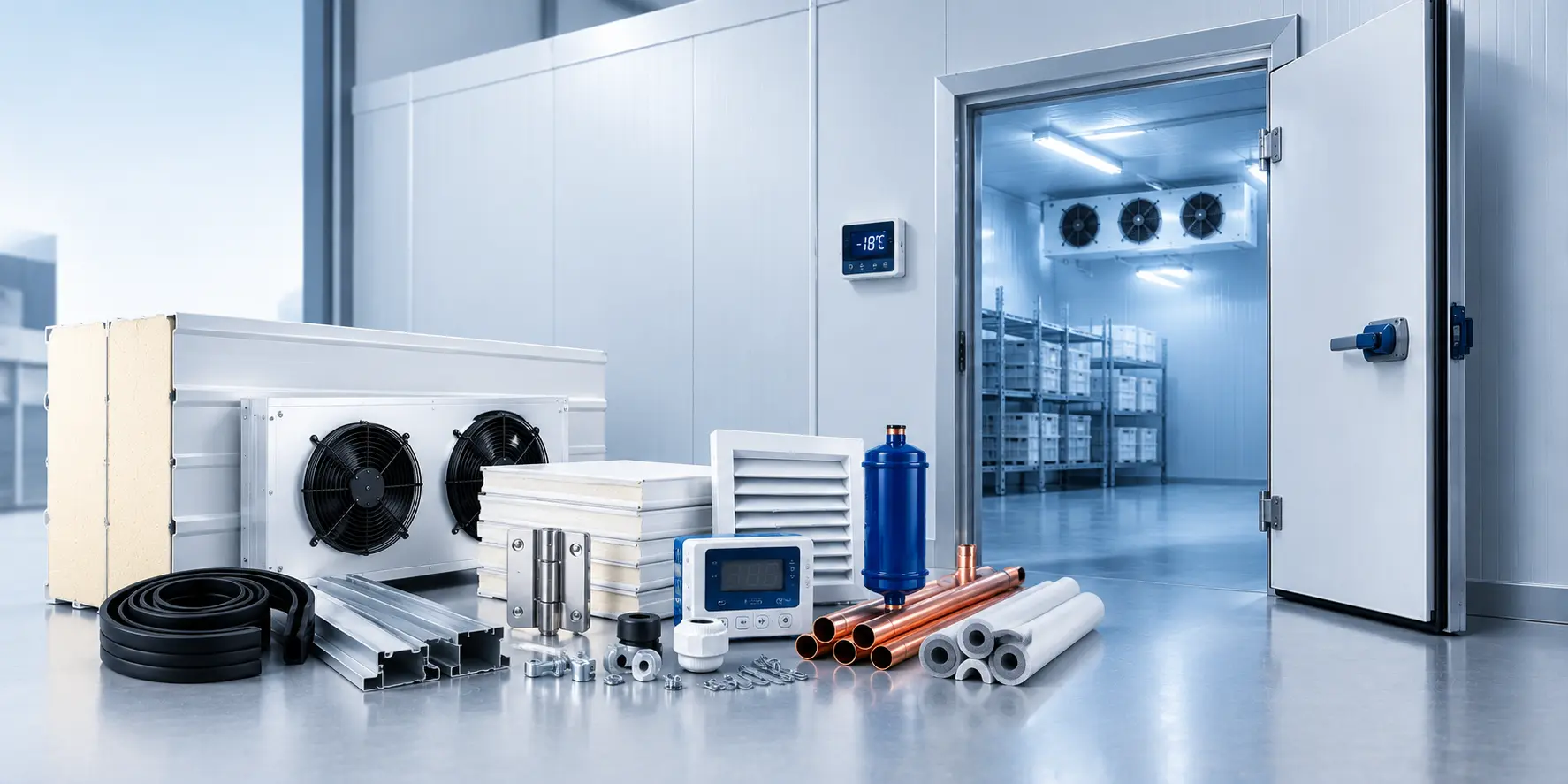
Maintaining spares for commercial refrigeration is very costly for any company dealing with products that require storage at low temperatures. With knowledge of the lifespan of these refrigeration spare parts and the machine itself, you will be able to schedule maintenance, budget accordingly, and lower the chances of an unexpected system breakdown. Commercial refrigeration machinery has an estimated lifespan of around 10 to 20 years, depending on the type of the unit, its usage, and maintenance.
In the UAE, heat and dust can wear systems down faster. That is why regular checkups matter more there. Also, the right refrigeration spare parts and timely swaps can strongly affect how well the system stays stable over time. This write-up looks at typical life spans for common commercial refrigeration equipment. It also points out what cuts the lifespan short and gives simple steps to help it last longer.
So, what should you expect from your equipment, and how can you stretch its service life? Let’s go through it.
What’s the Average Lifespan of Commercial Refrigeration Equipment?
Commercial refrigeration gear often lasts between 10 and 20 years. Reach-in models and display cases tend to fall around 10 to 15 years. Some well-made walk-in cold rooms can go past 20 years. The exact number varies a lot. Care done on time, the local weather, how hard the unit is used, and how good the parts are all matter.
Picture a delivery truck. The engine may keep going for a long stretch, but it will only stay healthy when routine items are swapped out. That means filters, belts, and tires are replaced when they should be. Look closely at it. The large, costly equipment may run for many years. Meanwhile, smaller parts can wear out in just a few years. Those smaller items are often the reason the larger system keeps working.
Here is the point to note. If a door gasket is worn, warm air can slip in. Then the compressor has to work longer. A cheap part can still cut the life of the most expensive part in the setup.
What Actually Shortens Refrigeration Equipment Life in the UAE
Manufacturers publish lifespans based on decent operating conditions. The Gulf isn’t always decent.
1. Extreme heat and humidity
When it gets very hot outside, condensers do not push heat away as easily. The compressor keeps running and has to work longer to keep up. That added strain can build year after year. Rooftop units and outdoor condensing units feel the impact the most.
2. Dust and dirty coils
Dirt and sand get everywhere. Once the condenser coils get blocked, airflow becomes restricted, and pressure builds up. When you have to do one thing, clean the coils.
3. Tired gaskets, hinges and heaters
In busy kitchens and cold rooms, doors get opened again and again all day long. With that kind of use, the seals slowly flatten. The hinges can start to sag too. Door heaters also stop working, even when they look fine at first.
Once one part goes, the trouble spreads. You end up with a leak. Or you get frost where you should not. Then the entire system has to deal with it.
Refrigeration Spare Parts That Wear Out First
Knowing what fails early helps you plan replacements before a breakdown forces the issue.
Keep an eye on:
- Check the door seal first. Look for small gaps or hairline cracks. Also try closing the door and see if it stays tight.
- Next, check the hinges and the latch. If a door droops, the gasket gets pushed out of place. That can let warm air slip inside.
- Then listen to the fan motors. On the evaporator and condenser sides, an odd noise or a slow spin can point to wear. Vibration can be another clue.
- Take a look at the defrost heater and the heating cables. Their job is to stop ice on the door edge, the drain area, and the coils. If they fail, frost forms quickly.
- Now test the thermostat, controller, and sensors. If a sensor drifts, the system can act wrong even when things seem fine.
- Finally, inspect the relays, contactors, and capacitors. These parts tend to fail. The sign can be subtle at first. Then the unit may not start at all.
Having a couple of vital components on your shelf can make all the difference between a 30-minute repair and a 48-hour downtime.
Repair or Replace? A Simple Rule of Thumb
A lot of techs follow this rule. When a unit is near the end of its expected life, and the repair is close to half the cost of a new unit, it usually pays to replace it.
For newer equipment, repair is often the better call. If you have a 6-year-old unit and you swap a fan motor, replace a gasket, or change a controller, the bill is usually not huge. That kind of work can keep it running for years.
Then pause and ask one thing. Did you just have a one-time failure? Or has this been the third repair this year? If it is the second case, you should take that as a warning.
Cold Room Storage Solutions: Getting 20 Years Out of a Walk-In
Quality cold rooms have longevity; however, those that last up to 20 years have several things in common:
- Insulated panels should be kept clean and without any dents or water damage.
- Ensure that the doors fit properly. Inspect the hinges, latches, and seals.
- Use the right size. If the unit is too small, it will run all the time and fail sooner.
- Apply it practically. Leave the door closed, do not obstruct ventilation, and do not overstuff the room.
A well-designed walk-in is a long-term asset, and how you maintain it decides whether it delivers on that.
Maintenance Habits That Add Years
You don’t need a complicated program. A simple routine goes a long way:
- Weekly: Inspect seals on the doors and remove any obstructions from the air vents.
- Monthly: Wipe gaskets and ensure there are no obstructions to the drains.
- Quarterly: Clean condenser coils and test fan motors and heating cables.
- Twice a year: Refrigerant level checks and electrical checks should be done by a technician before the summer period.
- Always: Log temperatures. A slow upward drift is your earliest warning sign.
Did you know? Most emergency call-outs are triggered by parts that were already showing symptoms. A five-minute weekly inspection catches many of them.
Choosing a Refrigeration Spare Parts Supplier in the UAE
Not every piece that fits will hold up. If you are swapping a part, the build quality matters. A low-grade part can fail in a short time, and then you are back at square one.
When you choose a supplier, check these things:
- They keep parts from well-known international makers
- They can match parts to your exact machine
- They handle both cold room and kitchen refrigeration needs
- They ship fast, since lost time costs more than the part
Conclusion
Commercial refrigeration systems normally last between 10 to 20 years. With the hot weather in the UAE, this is achieved through good maintenance, not by chance. Clean coils, gasket condition, and timely replacement of refrigeration spare parts keep the compressor, the room, and the stock within the room in good condition.
Are you looking for commercial refrigeration spare parts and services? Consult a professional.
Contact Barad Atlanta Trading LLC with your model details, and we’ll help you find the right parts.
Frequently Asked Question
How long does commercial refrigeration equipment last?
Most refrigerators last for about 10 to 20 years. Reach-in units and displays last for 10 to 15 years, while good-condition walk-ins last more than 20 years.
Which refrigeration spare parts need replacing most often?
The door seals, motor fans, defrost heaters, heating wires, thermostats, and electrical parts such as relays and capacitors deteriorate first.
Does hot weather shorten refrigeration equipment life?
Yes, since high ambient temperatures and dust increase the workload on both the condenser and the compressor, making maintenance of coils in the UAE even more important.
When should I replace my equipment instead of repairing it?
If the machine is close to the end of its useful life and the cost of repairs is about half the cost of buying a new machine, then replacement would be a better option.
How can cold room storage solutions last longer?
Select the best panels and doors, properly design the system, maintain seals and hinges, and have a maintenance program.